

- CAPTAIN'S LOG / Asia
- 3 December 2019
Enduring charm
Everywhere you look in this gentle isle, you’ll find friendly smiles and a welcoming, ancient culture. Bali is beach bliss and good times.

KNOWN AS THE ISLAND OF THE GODS, Bali is the most famous of all Indonesia’s 17,600 islands. This is the fun capital of South-East Asia, catering to the complete spectrum of visitors with high-end villas and hotels to dance-on-the-table, late-night joints.
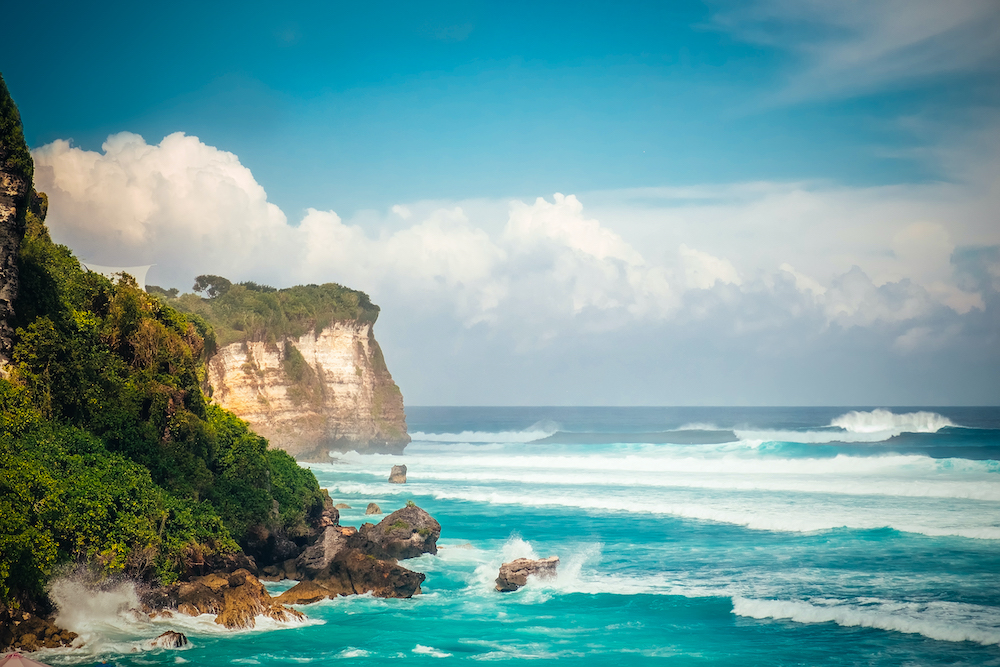
Bali’s dramatically beautiful coastline has it all for a visiting yacht, from surf breaks and coral reefs to clifftop temples and sugar-white beaches. The upscale dining and spa offering is legendary, while the party scene along the coast has a buzzing, fun-loving vibe all its own. In the lush interior, steeply terraced rice paddies glow an almost electric green, framed by a landscape of gently puffing volcanoes and equatorial rainforests, where visitors white-water raft down jungle rivers and hike to hidden waterfalls.
After I travelled the world as a superyacht captain, Bali’s ethereal allure drew me to settle down. This welcoming island still provides new experiences, along with growth in the marine tourism industry that provides for my family.
Weather and volcanoes
Sitting only eight degrees south of the equator, Bali is not subject to tropical revolving storms. There are two seasons, but average daily temperatures vary little, ranging from 28–33°C all year round. Rain and thunderstorms can occur at any time of year. At times, rainy and windy conditions are caused by storms off north-west Australia.
The dry season has less humidity and runs from May to September, with prevailing southeasterly winds ranging from light and variable up to force 4 (16–18 knots). The wet season is more humid (up to 80 percent humidity at times) and runs from November to March. Prevailing winds are northwesterly, rarely getting above force 3 (12 knots).
Mount Agung on Bali’s north-east side is an active volcano that spewed some ash clouds and minor lava spurts in the first half of 2018, causing some disruption to air travel and an exclusion zone around the volcano.
Visas and permits
Visiting Indonesia by yacht used to be very challenging, but three Presidential Regulations have eased the process somewhat and opened up this vast cruising destination for private-use yachts.
A cruising permit and temporary import permit are now applied for online, and a simple customs inspection at the entry port is the only extra to the normal CIQP entry process. A Green Book and SPB sailing permit are issued at the entry port, following which a foreign-flagged yacht is theoretically able to cruise freely without further domestic clearances for the duration of the temporary import. Customs can grant up to three years temporary import for any one visit.
Foreign yachts are forbidden from any form of commercial activity within Indonesian waters, including chartering or sale of vessel or parts thereof, and the penalties are severe.
All yachties, whether crew or guest, are treated as tourists for immigration purposes and various visas apply according to the length of stay: most use the 30-day free Visa-on-Arrival. Visitors can enter and exit by yacht or airplane and yacht crew do not sign on/off as commercial ship crew must. Private jets are welcome at Bali International Airport and VIP arrival/departure is commonplace.
Marinas and mooring
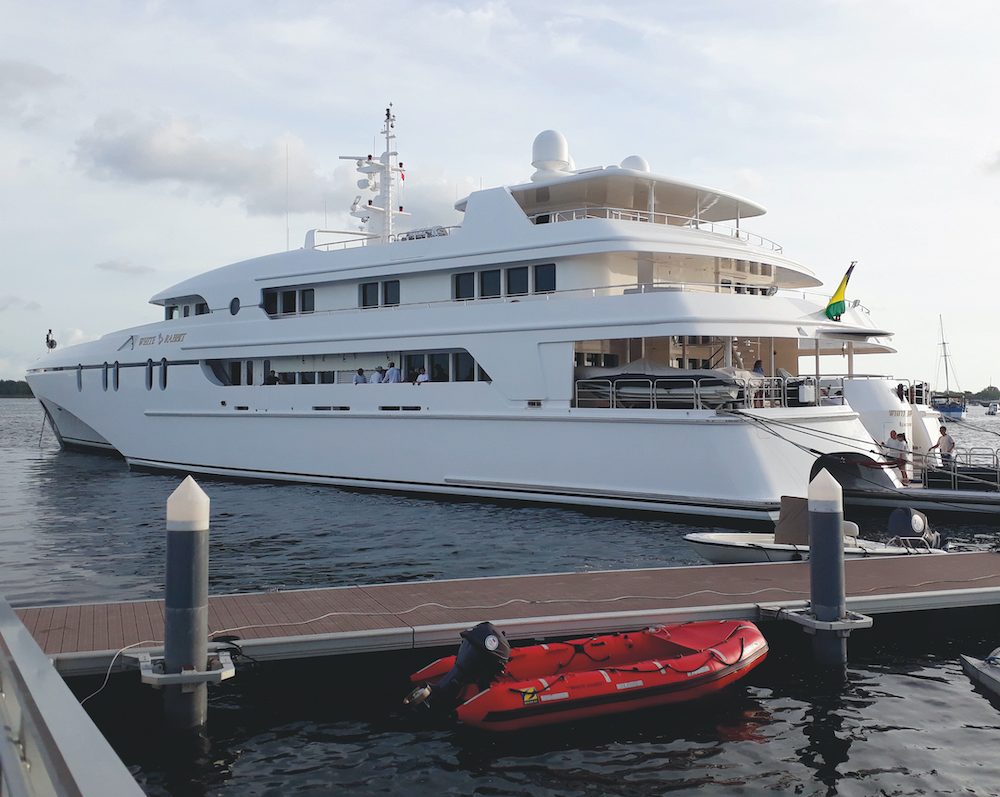
Yachts can moor in the main port of Benoa on commercial docks, or at the Bali Marina if less than 30 metres LOA. Benoa safe water mark is at S8°45’14″E115°14’55”.
The newly opened Sanur Bay facility of the Royal Bali Yacht Club (RBYC) incorporates the Big Boat Quay, which has moved from Benoa port. The RBYC has plans for expansion. Currently, yachts up to 90 metres can moor stern-to, using bow anchors and stern lines onto mooring blocks with shore access via secure pontoons. Basin depths are a minimum seven metres at MLWS.
Full international clearances can be done at all of the above, and good quality, inexpensive fuel can be bunkered by truck or barge. Big Boat Quay at RBYC has the first legal marine fuel station in Bali.
Provisioning
All kinds of provisions can be catered for in Bali with abundant fresh local fruit, vegetables and spices available – even locally-made sausages and cheeses. With so many high-end hotels and resident expats, a large range of items is imported as standard. The flowers available on the island are a dream.
Activities in Bali
There’s a great deal for guests and crew to do in Bali, including scuba diving, surfing, kite-surfing, cultural tours, hiking, restaurants, spas, bars and clubs. We recently had guests join the yacht in Bali and spend their entire 10-day vacation based on the barbecue dock; they did shore excursions, went shopping for furniture, had spa days, and dined out every night.
Itinerary planning
There are some reliable yacht agents operating in Bali, so both the planning and execution of guest cruises have become easier for captains, despite being so far from the usual yachting haunts.
For most visiting yacht captains, Bali is the main hub location at which to prepare for guest trips to the NTB (Nusa Tenggara Barat) and NTT (Nusa Tenggara Timor) islands in the middle section of Indonesia, including Komodo.
The range of services from fuel to provisions is comparable to almost any Western port.
The yacht can be supported via Bali for all requests arising during extended island cruising due to Indonesia’s comprehensive airport network and great agency support.
With the three-year temp import period now becoming standard, more foreign yachts are basing in Bali long-term.
Cultural awareness and safety
Bali’s culture and religion are particularly special and witnessing a ceremonial procession is often the highlight of a visit. Be aware that it is considered rude throughout Indonesia to touch a person’s head, so ruffling a child’s hair is to be avoided.
In general, the Balinese are very friendly, considerate and tolerant. Security efforts are visible and now such a part of daily routine that visitors need only take normal precautions such as not leaving mobile phones on exposed tables or flashing cash around.
Driving is chaotic here, so hiring a car and driver is the norm, and this only costs around US$15 more per day more than self-drive hire cars.
Local charities
During the thirteen years I have been supporting foreign superyacht visits, we have also been involved with local charity work. We helped inspire the creation of Taman Bacaan Pelangi (Rainbow Reading Gardens), which supplies books to remote coastal communities via yachts and sets up small after-school libraries.
In Bali, we support the efforts of Bali Street Kids Orphanage (YKPA), which enables street kids to have a childhood, education and future. We also assist Solemen in its campaigns to ease the suffering of Balinese people with various medical and financial afflictions.
Top ten Bali experiences
-
- Kecac dance and Jimbaran Beach dinner – the sunset tour to the Uluwatu Temple to watch the traditional Kecak dance performance is one of the stand-out cultural activities for guests and crew in Bali. The spectacular Balinese Hindu temple clings to a cliff 70 metres above the Indian Ocean, making for superb sunset views as you walk through the monkey forest and up the stone pathway to the temple. You’ll then watch the Kecak dance, which tells the story of the Hindu epic Ramayana, before descending down to the beach for a seafood barbecue dinner served at tables on the sand.
- Rock Bar, Ayana Resort – further along the dramatic cliffs of the west coast you’ll find Rock Bar Bali, where the trip up the steep cliff-face in the inclinator is just the start of the fun. Voted one of the world’s best bars many times over, Rock Bar is the ultimate sunset venue, with patrons drinking cocktails on a deck that is cantilevered out over the ocean, seemingly hanging in space 14 metres above the crashing waves. There’s also live entertainment, with an impressive line-up of acoustic and DJ acts playing on a stage carved into the rocks.
- Day spas – Bali is heaven on earth when it comes to day spas. The majority of high-end spas are clustered in the upscale beach resort area of Seminyak, although there are also some sensational spas up in the tropical highlands of Ubud, as well as at Jimbaran. The Thermes Marins & Spa at Ayana Resort is one of the best, with its stunning cliff-top massage rooms and seawater pools.
- Helicopter tours – As you soar up above the jungles, volcanoes and beaches of Bali, you’ll instantly understand why this lush green land is referred to as the Island of the Gods. Airport-to-yacht transfers are available.
- Mozaic Restaurant, Ubud – chef Chris Salans creates an exotic blend of French gastronomy and Balinese flavours at this award-winning restaurant in Ubud. The garden setting is exquisite, while guests can also enjoy private dining experiences as well as cooking classes on site.
- Golf courses – there are several options for golfing in Bali, with three courses offering dramatic views. New Kuta Golf is set on a cliff on the Bukit Peninsula, and this links-styled fairway has great ocean views as well as some challenges in the form of strong sea breezes and deep bunkers. In Nusa Dua, Bali National Golf Course is an award-winning 18-hole course which meanders through creeks and gullies, past forest groves and a lake. Finally, up in the verdant highlands, Handara Bedugul course offers beautiful backdrops to every shot.
- Temple tour – for guests or crew wanting to engage with Balinese culture and ancient architecture, a temple tour will take them on a journey through some of Bali’s most sacred sites, from seaside temples to tranquil lake temples and temples carved into sheer rock cliffs.
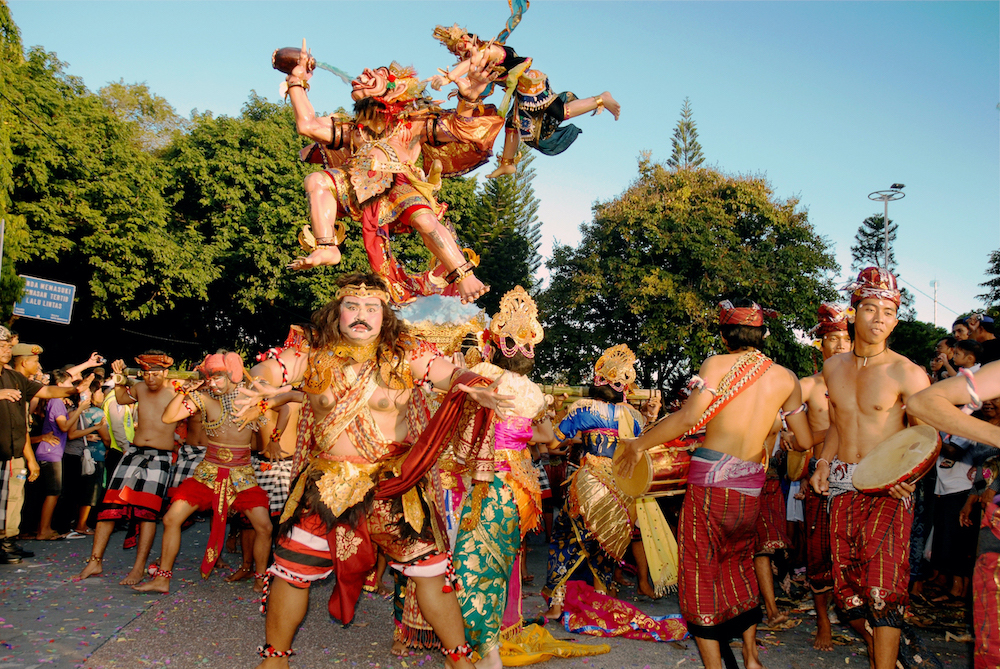
- Nyepi and Ogoh Ogoh parade – Nyepi is the sacred Balinese Day of Silence, and falls either in March or April. All activities cease for 24 hours, from cooking to driving to using electricity. Ports and airports close for this day, and a serene calm descends over the island. The night before, however, is another story, with the streets coming alive with the Ogah Ogah Parade, where grotesque and wild effigies are held aloft by the crowd in an attempt to ward off evil spirits.
- Deep-sea fishing – Bali offers some of the best deep-sea fishing on the planet, thanks to the nutrient-rich waters flowing through the Lombok Strait. This current, called the Indonesian Throughflow, connects the Pacific and Indian Oceans and creates a dazzling array of marine life and sensational fishing and diving.
- Mola Mola diving – the ocean sunfish (Mola mola) is one of the strangest creatures of the deep and can grow up to the size of a pickup truck. At Crystal Bay on Nusa Penida, guests can scuba dive down to a Mola mola cleaning station, where these gentle giants ascend from the depths to be cleaned of parasites by schools of banner fish. This is a dive best done between June and October, and is for experienced divers only as there are strong currents.

