

- CAPTAIN'S LOG / Australia
- 29 March 2021
Welcome to the emerald isle
An island known for its dark convict history, Tasmania boasts colonial cities of whisky bars and artisan workshops, and a natural landscape so vast – so primal – that it feels almost otherworldly down here near the bottom of the earth.
In Tasmania, hiking paths wind through twisted, gnarly forest where moss glows electric green in the gloom, and wombats and wallabies graze by snowmelt streams and tranquil rivers. Mountains soar over blue-green bays of dazzling perfection, edged by arcs of sugar-white sand and temperate Australian rainforest that stretches off into the forever.
There are endless wild landscapes in Tasmania, but gentle ones too – places that feel somehow transplanted from distant and familiar lands: emerald green fields dotted with sandstone cottages selling Devonshire teas and gourmet jams, and fashionable river cities of music festivals, award-winning restaurants, and edgy, world-class art galleries.
In all its extremes, Tasmania is a haunting, almost eerie place of astonishing, heartbreaking beauty, with a settler history so deeply marked on the local psyche you can almost feel it in the air. Brace yourself, for Tasmania feels like nowhere else on earth.
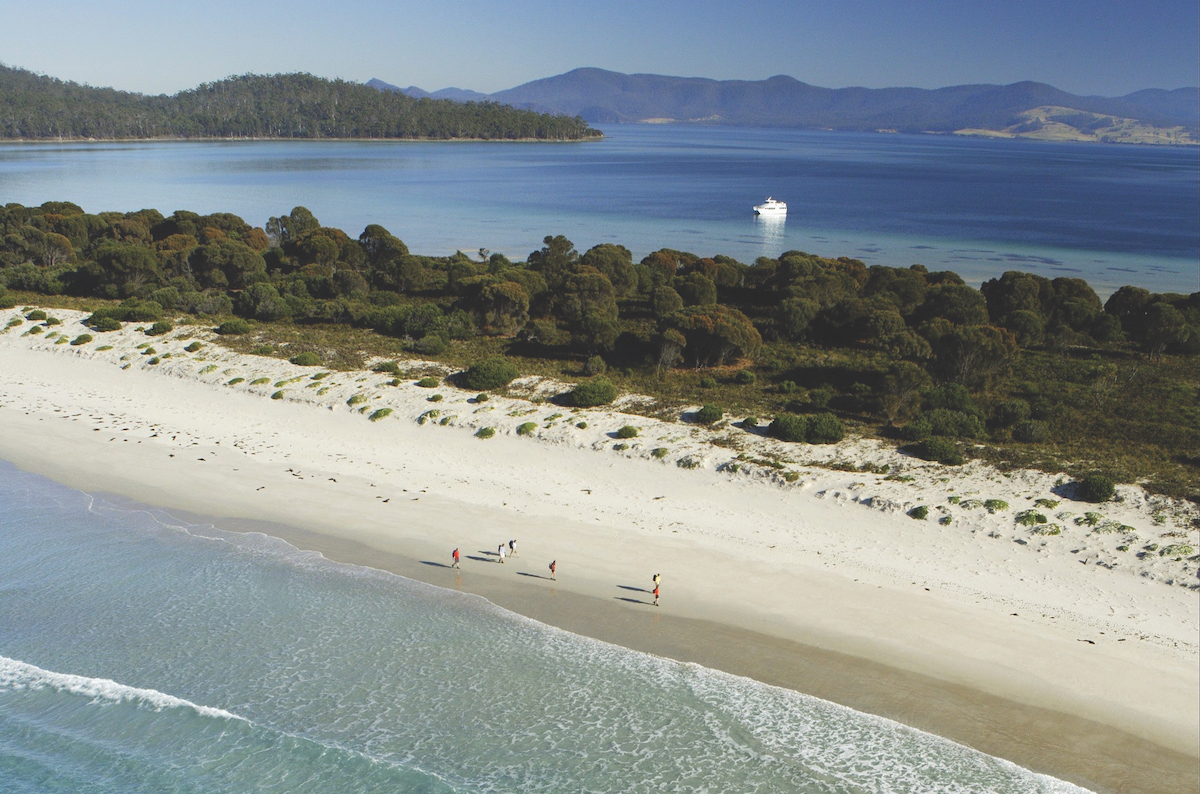
Tasmania is a pristine island in Australia’s south-east, lying 200 nautical miles south of Melbourne and 400 nautical miles south of Sydney. With a population of around 550,000 and a strong maritime heritage, Tasmania is able to offer good facilities in all of its major ports.
Logistics
There are two major ports in Tasmania. Hobart in the south-east is the state capital and is located 11 nautical miles up the beautiful Derwent River, while Launceston in the north is accessed via a short cruise down the tranquil Tamar River. Both Hobart and Launceston are well-equipped to cater for superyachts, and Tasports, the Tasmanian Port Authority, can assist with berthing, fuelling and waste removal.
Pilotage and exemptions
A pilot is required for all vessels exceeding 35 metres, unless an exempt master is in charge of the vessel. Pilotage charges comprise a fixed charge of AU$1,821, plus a charge per gross tonne, covering pilot services and pilot launch. The gross tonnage charge will only apply to vessels greater than 9,999GT.
Pilotage exemptions are offered to masters of vessels exceeding 35 metres LOA, provided they meet the requirements of the Pilotage Code. In addition, Tasports offers pilot exemptions for low-risk vessels calling at declared pilotage areas in Tasmania. In order to be eligible for the exemption, a vessel must be:
-
- Between 35 and 75 metres LOA
- Not carrying more than twelve passengers
- Not a cargo-carrying vessel.
- Not engaged in towing operations
- Not a vessel that has a normal operating speed greater than 25 knots
More information on pilotage and exemptions found at tasports.com.au.
Cruising south to Tasmania
You could choose to cruise either from Melbourne or Sydney across the Bass Strait, stopping over in the Furneaux Group, which includes Flinders, Lady Barron and Clarke Islands. These are pristine islands offering safe anchorages in all weather.
From there it is a day cruise down to the next cruising ground along the Tasmanian east coast, where you’ll find some stunning stops, including the breathtaking Wineglass Bay and Freycinet National Park, Maria Island and Port Arthur, which is steeped in Australia’s convict history. All are excellent stops en route to Hobart.
Hobart
The capital of Tasmania is well known for its beautiful scenery and old-world charm.
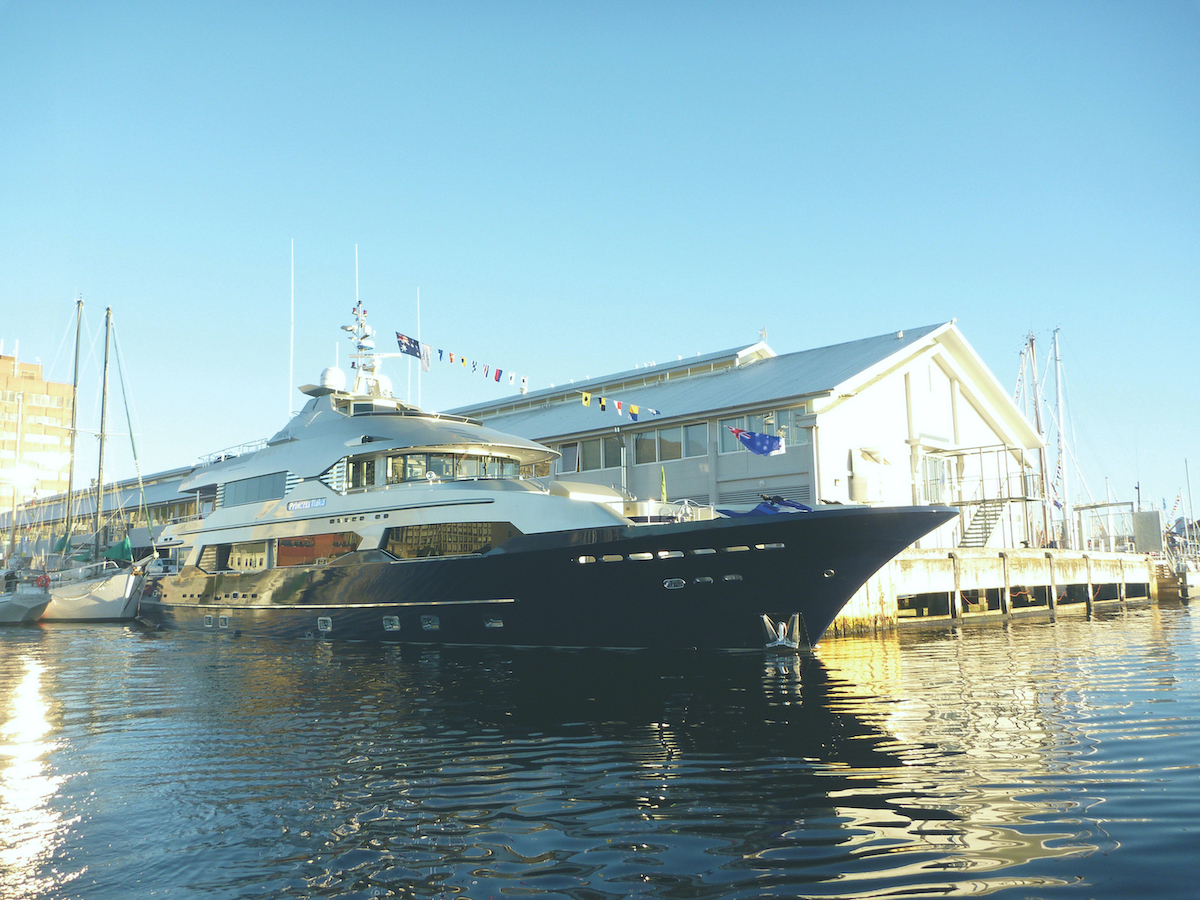
Berthing for superyachts is available at Elizabeth Street Pier right in the centre of Hobart.
Refit and maintenance facilities are excellent, with the local boat-building industry going from strength to strength. Incat, a world player in the fast ferry market and builder of the 61-metre trimaran superyacht M/Y White Rabbit by North West Bay Ships, has helped put Hobart on the map as a superyacht centre of excellence, along with Muir Winches, one of the world’s most respected windlass manufacturers for superyachts.
Facilities for haul-out in Hobart include the Domain Slipway which offers a 1,200-tonne slipway operated by Tasports, as well as various other smaller refit facilities, marine engineers, painters and fine interior finishers.
Hobart is well known in the world of yachting as the finishing point for the annual Rolex Sydney Hobart Yacht Race; the race on any true sailor’s bucket list.
Inland adventures
A short helicopter flight and you’ll be enjoying the pristine Cradle Mountain National Park or some superb trout fishing. If you are into hiking, the Overland track is rated as one of the best long-distance hikes worldwide, winding through the surreally beautiful UNESCO World Heritage area of central Tasmania. There is an abundance of outstanding hikes meandering throughout the rest of Tasmania, including the fabulous Three Capes walk along the southern coast and a hike through the remote wilderness of the Walls of Jerusalem National Park.
A valid park entry permit is required for entry to Tasmania’s national parks. Different pass options available, the most cost-effective being the Holiday Pass range, which covers entry into all of Tasmania’s national parks for up to two months. More information can be found at parks.tas.gov.au.
South and west of Hobart
Only an hour’s cruise from Hobart are the sheltered waterways of the d’Entrecasteaux Channel and the Huon River. A further day’s cruising would find you on Tasmania’s west coast at Port Davey, a pristine UNESCO World Heritage area of calm waters and towering mountains. A little further north on the west coast is the township of Strahan and the magnificent mirror-like reflections of the Gordon River.
Diving
Diving for crayfish, abalone or scallops are all big attractions when in Tasmania, but 7mm wetsuits or dry suits are needed. From the giant kelp forests that stretch along its rugged coastlines to the deep sponge gardens and a ship’s graveyard, Tasmania offers a wide variety of scuba diving, and crayfish and abalone are often found in abundance between the rocky boulders of a reef. Many species are endemic and unique to Tasmania, such as the handfish, weedy seadragons and seahorses.

