

- CURRENT NEWS / New Zealand
- 3 December 2020
COVID-19 Update
Australia and New Zealand have implemented an air travel bubble that allows the movement of people between the two countries with implications for the yachting fraternity.
For those coming from Australia, there must be $50,000 of marine services (berthing or refit) booked in New Zealand. Only essential and permanent crew can complete the delivery and time at sea can be counted towards quarantine. Then, via the air travel bubble, owners can fly in to join their yacht. For more information view New Zealand’s Customs website and keep up to date with border regulations.
For foreign flagged yachts entering New Zealand, there is a Maritime Border Order in place which requires yachts to seek an exemption to enter New Zealand’s waters. The request for an exemption is best made through a yacht support agent. Only essential yacht crew will be granted the right to enter New Zealand and 14-days of quarantine is mandatory.
Entering New Zealand
NZ MARINE HAS COMPILED THE FOLLOWING INFORMATION to assist visiting yachts with their obligations regarding customs and immigration, biosecurity, certification, yacht importation, and taxation.
Yachts and small craft arriving in New Zealand must comply with all border entry requirements that are in place to protect New Zealand. You will be given an info pack on arrival, although it is recommended you take a look at the information beforehand, as some requirements should be met prior to arrival.
Step-by-step instructions on customs and biosecurity procedures are available here: mpi.govt.nz/importing/border-clearance/vessels/arrival-process-steps/yachts-and-other-recreational-vessels.
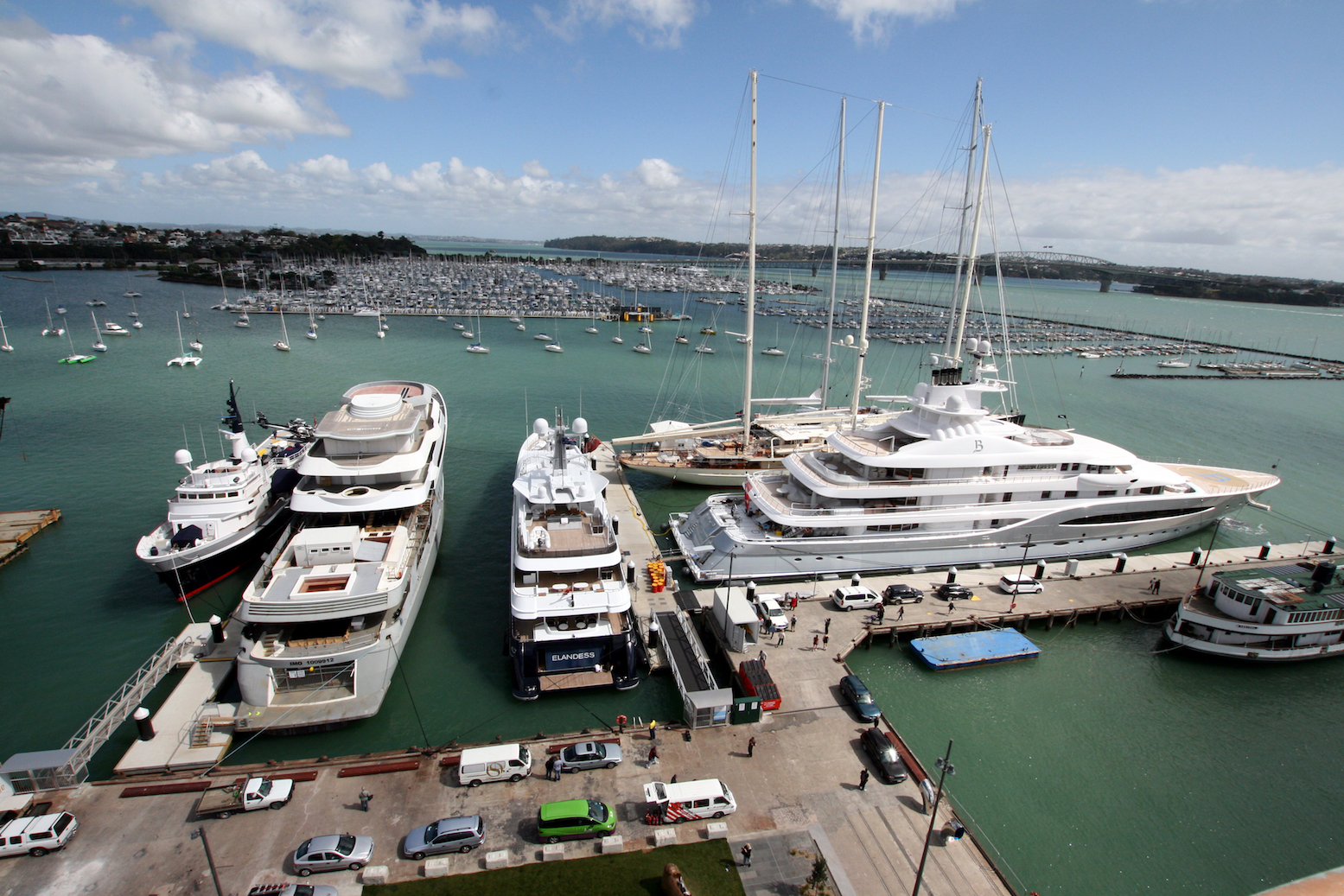
Superyachts exceeding 500GT should also report to the local harbourmaster’s office upon arrival on the NZ coast.
Northland: harbourmaster@nrc.govt.nz
Auckland: harbourmaster@at.govt.nz
Customs information
You will first make contact with Customs when you provide an Advance Notice of Arrival.
Download the yacht pack as detailed earlier. For further information, see the New Zealand Customs Service website: customs.govt.nz.
Contact:
Ship Servicing
Tel: +64 9 307 6516
Email: yachts@customs.govt.nz
Temporary entry of vessels
If you own and operate the yacht you arrive on, and qualify as bona fide visitors, you don’t have to pay Customs charges (duty and GST) for your vessel.
On arrival, your vessel will be given a Temporary Import Entry (TIE) that is valid for 24 months.
To get a TIE, the master of the vessel will need sign a declaration agreeing that the vessel will leave New Zealand shores within 24 months from the date of arrival.
Biosecurity – Ministry for Primary Industries (MPI)
On arrival, vessel masters and passengers will need to complete documentation regarding any biosecurity risk goods on board, including the Master’s Declaration. Once this is checked and any risk goods cleared or removed, the vessel is free to travel in New Zealand waters.
New Zealand Passenger Arrival Card
Every person on board the vessel must complete a personal passenger arrival card that includes notification of any personal quarantine or biosecurity risk items, along with Customs and Immigration information.
Master’s Declaration
New Zealand law requires the master of all arriving vessels complete the declaration NZCS 340 Advance Notice of Arrival, available at: customs.govt.nz/personal/travel-to-and-from-nz/yachts.
No food may be landed without permission of a biosecurity inspector. The master’s declaration now includes compulsory questions for assessment of the vessel’s biofouling risk.
For full information on arriving into New Zealand and biosecurity clearance visit: biosecurity.govt.nz/importing/border-clearance/vessels/arrival-process-steps/yachts-and-other-recreational-vessels.
Health
Visiting yachts must report any serious illness and suspected quarantinable disease on board to the Ministry of Health during the voyage to New Zealand, or to the biosecurity inspector clearing the vessel on arrival.
For further help, contact:
Ministry of Health
Tel +64 4 496 2000
info@health.govt.nz
New requirements on biofouling
Visiting yachts should easily be able to meet the new requirements by cleaning their hull and niche areas within thirty days of arrival to New Zealand, and by maintaining a current anti-fouling paint.
Most importantly, masters should carry documentation that the hull has been cleaned, such as receipts or reports from haul-out, or date-stamped photos of all hull and niche areas following cleaning, as this is how compliance will be assessed.
The rules are set out in the Craft Risk Management Standard (CRMS) for Biofouling. For more information see: mpi.govt.nz/news-and-resources/media-releases/new-biofouling-guides-aim-to-stop-dirty-vessels-entering-new-zealand.
While most yachts should meet this requirement by having the hull cleaned at the last port of call before New Zealand, vessels arriving for refit or repair may have the vessel hauled out for cleaning within 24 hours of arrival. To comply in this manner, vessel masters should be able to produce proof of booking into an MPI-approved slip or haul-out as part of their arrival documentation.
To request further information about the CRMS, contact:
standards@mpi.govt.nz.
Immigration New Zealand visa requirements
For information on visa requirements for non-charter or charter yachts,
read the immigration instructions (southpacificsuperyachting.travel/ uploads/2/4/2/3/24232541/superyachting_ and_destination_nz.pdf).
You can undertake a quick check on the Immigration New Zealand website to find out whether or not you need a visitor visa (govt.nz/browse/immigration-and-visas/visitor-visas-and-the-nzeta/check-if-you-need-a-visitor-visa-or-an-nzeta/).
The following links to information on the website may be of interest.
-
- Guide for visitors arriving by yacht (immigration.govt.nz/new-zealand-visas/ apply-for-a-visa/about-visa/travelling-by- private-yacht-or-aircraft-visitor-visa).
- Information for crew and owners of superyachts (immigration.govt.nz/opsmanual/#34308. htm).
- Extending your visitor visa (immigration.govt.nz/migrant/stream/visit/visitors).
- Extending your stay to carry out maintenance and repairs (immigration.govt.nz/opsmanual/34307.htm).
For further help, contact:
Immigration New Zealand Contact Centre
Tel +64 9 914 4100 or 0508 558 855 (24-hour service)
visitimmigration.govt.nz/contactus
Standards for foreign-flagged vessels
Motor launches and yachts are considered to be pleasure craft and not commercial vessels if they are:
-
- not used for hire or reward
- used exclusively for the owner’s pleasure or as the owner’s residence
- not used by a business.
The term pleasure craft is defined in Section 2 of the Maritime Transport Act. Owners should check the full definition in the Act to determine whether their vessel is operating as a pleasure craft or a commercial vessel.
Standards for pleasure craft
Foreign-flagged motor and sailing passenger yachts that operate commercially in New Zealand are subject to the following standards: Vessel and safety management system certification.
Since 1 July 2014, operators of such vessels have been required to hold a Maritime Transport Operator Certificate. The operator must have a documented safety management system that meets the requirements of Part 19. More information on requirements for maritime transport operators can be found on the MNZ website (maritimenz.govt.nz/commercial/safety/safety-management-systems/moss/).
-
- MNZ may consider applications for exemptions from the requirement to hold a Maritime Transport Operator Certificate where the vessel:
-
-
- operates in accordance with the ISM Code; and
- holds foreign non-SOLAS survey certificates that meet or exceed New Zealand non-SOLAS survey standards.
-
Applications and enquiries should be directed to exemptions.officer@maritimenz.govt.nz.
Crewing
Crewing on commercial vessels is covered by Maritime Rules Part 31: Crewing and Watchkeeping (maritimenz.govt.nz/rules/part-31/part31-maritime-rule.pdf).
Navigational Safety Rules Maritime Rules Part 91 continues the basic navigation safety rules contained in the Water Recreation Regulations, 1974. Part 91 requires carriage of personal flotation devices on board recreational craft. This includes pleasure craft and manually powered craft used in commercial operations, eg sea kayak rentals.
More information can be found at maritimenz.govt.nz/rules/part-91/part91-maritime-rule.pdf.
Charter regulations
A visiting superyacht may be able to be used for commercial charter for up to 65 percent of the total period the foreign flag yacht is visiting New Zealand. See customs.govt.nz for more information.
Special provisions apply to gain approval from Customs, Inland Revenue Department, and Maritime New Zealand to ensure the superyacht complies with their requirements.
Superyacht agents listed in this directory can assist a superyacht in meeting these requirements and the respective approvals.
Goods & Services Tax (GST)
A visiting yacht (entered on a Temporary Import Entry) may purchase goods (equipment) zero rated of GST, if the goods or services are to form part of the yacht for safe navigation and exported with the yacht.
Pleasure yachts may enter New Zealand under Temporary Import Entry, attracting GST at zero rate and no duty (see Customs information above).
For the latest information on taxation regulations, please contact the Inland Revenue Department on (NZ) 0800 377 774, alternatively visit ird.govt.nz.
Drugs and medication
Don’t bring illegal drugs into New Zealand.
If you need to bring prescription medication that contains narcotics, carry a doctor’s certificate saying the medication is necessary and is being used under doctor’s instructions. We recommend the medicines be kept in their original pharmacy container with label, and you should not have in excess of a three-month supply. Doctor’s prescriptions are also needed to obtain certain drugs in New Zealand.
For more information, visit medsafe.govt.nz.
Firearms
Vessels entering New Zealand waters are required to declare all firearms and weapons on board to Customs. It is illegal to bring firearms and unlawful weapons into New Zealand waters with the intention to land those firearms and/or unlawful weapons, or to actually land those firearms or unlawful weapons. These offences are punishable by imprisonment (police.govt.nz/advice/firearms-and-safety).
Income taxation
Superyachts and other visiting pleasure craft non-resident crew usually don’t pay income tax.
If you’re a non-resident crew member of a pleasure craft, you won’t have to pay income tax if:
-
- you perform services for a person who is not resident in New Zealand, and
- the pleasure craft is a temporary import under the Customs Act, and
- the pleasure craft is not owned by a New Zealand resident or a controlled foreign company, and
- you are not present in New Zealand on more than 365 days in any two-year period, and
- you are not otherwise a NZ tax resident under NZ tax rules, and
- you are not in New Zealand unlawfully.
If unclear on these rules, please check through a local tax adviser or yacht agent.
Find out more in the Visitor’s Tax Guide (IR294) or go to Immigration New Zealand’s website (immigration.govt.nz/new-zealand-visas).
Note:
For general information on entering and cruising New Zealand, see Destination New Zealand – Directory & Cruising Guide available at nzmarine.com/destination-nz.

